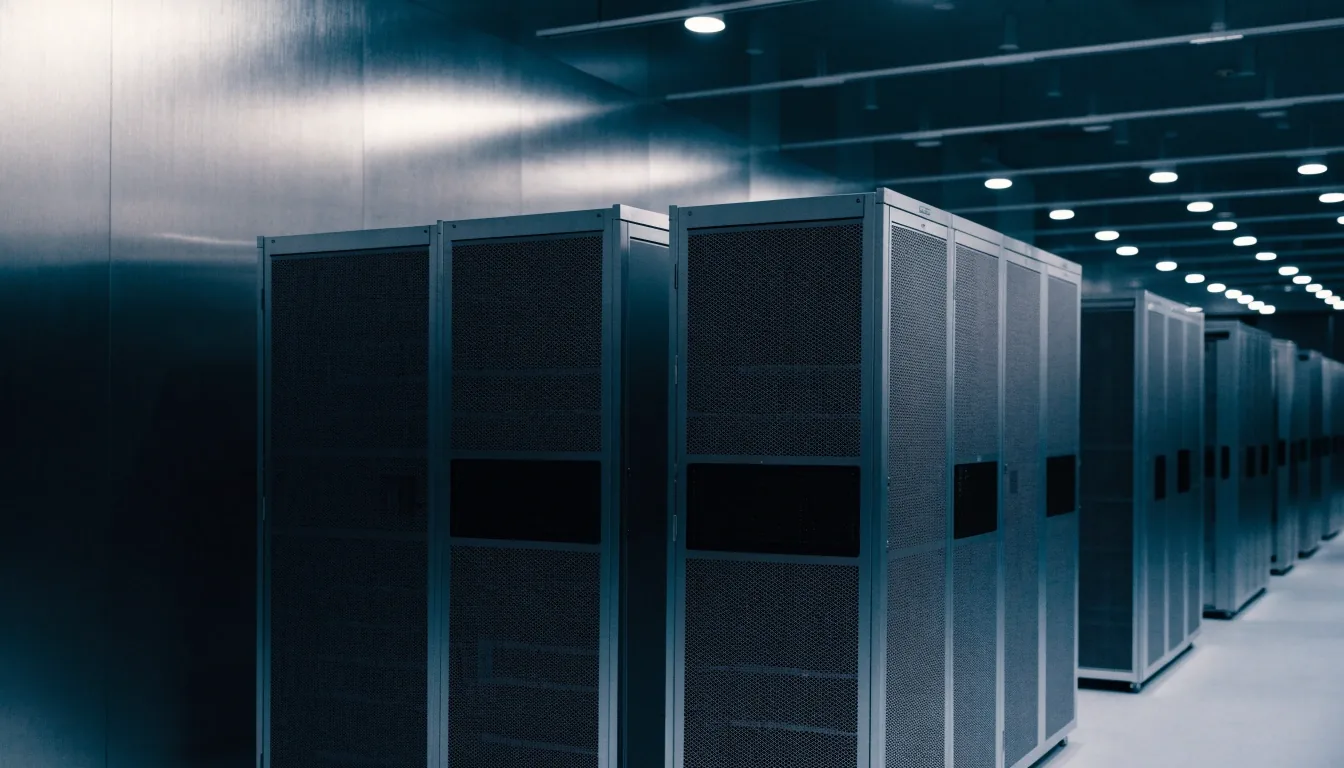

A cool-lit Munich server aisle at cold noon, rack cabinets running away toward the lower right

TechPeak Solutions GmbH · Munich

We build the software, then stay for the cutover.

Enterprise software and implementation from a Munich house that also writes down what it learns. Workflow automation, integration layers, IT service management.

Einsteinstr. 28 · 81675 Munich · +49 30 9329241

The house, plainly

Enterprise software for German operations teams

TechPeak Solutions GmbH develops and distributes enterprise software for companies that run real operations, not demos. We work from Einsteinstr. 28 in Munich with mid-market and enterprise buyers across Germany, and most of our conversations start the same way: a stack that grew by department, a migration deadline that came from the board, and nobody certain which system owns which record.

This page explains what we build, what we resell and integrate, and how to pick the right next step — whether that step is a single automated approval or a two-year system move.

Software vendor Distribution partner Implementation desk
Close detail of a brushed-metal rack seam with a single cyan light crossing it
Where racks meet, the seam is where the trust lives

What we actually develop

Two product lines carry most of our work

We are a software vendor and a distribution partner, and we say which hat we are wearing at each stage of a project.

Workflow automation

Route the work, not the org chart

Routing approvals, service requests, and recurring operational tasks across systems that were never designed to speak to each other. We pick one recurring task with a clear owner, wire it to the two or three systems it touches, and measure the exception rate before expanding.

Approval routing

Service requests

Exception tracking

Integration layer

One layer, three migrations

Software that sits between ERP, CRM, ITSM, and monitoring tools — translating records and events so a change in one place lands correctly in the next. Applications get replaced every five to eight years; a well-built layer survives two or three of those cycles.

Master data sync

Event routing · retry logic

Traced transformations

A matte clay render of three stacked module blocks, the middle one edged in cyan

Around those two lines we distribute and implement established platforms, which means a buyer can get the connecting software and the systems it connects from one contract. That is unusual in the German market, and it is deliberate: the party who owns the layer should also be accountable for what flows through it.

The shift in the room

Procurement no longer opens with a feature matrix

It opens with integration depth, migration risk, and data sovereignty. A mid-market manufacturer in Bavaria will ask where the data physically rests before it asks about dashboards. A finance team will ask how an expense record is audited long after it was submitted. That shift favors vendors who can show how their software behaves inside a regulated environment rather than describing it in the abstract.

The first question

Where does the data physically rest, and who can reach it?

The second question

What happens to a record six months after it was written — can we prove the audit trail?

The third question

If the migration deadline slips, which systems are already independent of the ones we are moving?

What changes for us

We write our own documentation this way, and we expect the same from what we distribute.

A person walking away down a cool-lit server aisle, seen from behind
Einsteinstr. 28, Munich — the room behind the documentation

Where the platforms you already own fit

No position on which CRM you should own

Buyers rarely start from nothing. They already run one of these, and the question is how a new component slots in. We take a position on how the data should move, and we map it on our platform landscape page.

Delivery & ITSM

Atlassian Jira · Matrix42

ITSM is often treated as a helpdesk tool. In practice it becomes the shared spine for how an organization requests, approves, and records internal work, from a laptop replacement to a production change. We connect it to the surrounding stack so ticket data does not dead-end in the service desk — whether the next stop is a CMDB, a procurement system, or a monitoring feed.

Travel, expense & CRM

SAP Concur · Salesforce

A finance team will ask how an expense record is audited long after it was submitted. We wire the layer underneath so the answer is a query, not a meeting.

Legacy-heavy environments

IBM

Where the stack runs on long-lived platforms, the connecting software has to speak the old dialect without freezing it.

Network monitoring

Paessler PRTG

Monitoring that only reports uptime is table stakes. What teams ask for is device health correlated with service impact — which means the monitoring tool has to feed the ITSM system.

Identity verification

IDnow

Regulated onboarding where the compliance evidence has to be generated as the check runs, not reconstructed later.

Overhead view of a Munich rack corridor with the ceiling LED grid visible above

The cut-over, walked

Four stages between a decision and a running system

A migration is rarely one weekend. We name the stages early, so the milestones are debatable while they are still cheap to change.

Discovery

Which systems are involved, who owns each record, and what the deadline really is.

Master data

One canonical source per record type, before anything moves.

Hybrid cut-over

Old and new in parallel for as long as the business can bear it, then a hard switch.

Sovereignty

Where the workloads land, who can reach them, and what the audit trail keeps.

Planning a migration path · one contact, scoping through cut-over

Integration is a product, not a project deliverable.

Our position

Applications get replaced every five to eight years. The layer between them, if it is built well, survives two or three of those cycles. That is the argument for treating integration as its own product with its own owner, rather than a line item inside the ERP budget.

When an ERP migration later arrives — and in German enterprises it usually does — the integration layer is the part that does not have to be rebuilt from scratch.

How we research and write

Where the middle layer earns its keep

The digital workplace problem nobody budgets for

Three places the layer between your systems does the actual work — and one place buyers routinely start from the wrong end.

Identity & endpoint

Digital workplace projects are usually funded as device management and quietly become identity, access, and endpoint security programs. Employees expect the same experience on a factory floor terminal and a home laptop, while the security team expects device posture to be provable at every login. Those two expectations pull in opposite directions, and the software that resolves them has to sit between identity providers and the endpoint fleet.

We build and integrate in that middle layer, which is also where the compliance evidence for an audit gets generated.

Cloud-native & hybrid

Cloud-native architecture and data sovereignty are not opposites, but they do require explicit decisions. Some workloads can run in a public cloud region inside the EU without further thought. Others carry contractual or regulatory constraints that dictate the physical location of the data and who can access it.

Hybrid designs handle both, at the cost of more moving parts. We help teams draw that line per workload, not per company.

Starting from zero

The most common beginner mistake we see is buying the platform before defining the process. A team licenses an ITSM suite, then discovers its incident workflow has three approval steps that the tool models as one.

Start with the process as it actually runs today, including the exceptions, then evaluate software against that.

Matte clay render of soft-rounded objects arranged as a data model with one cyan key element
One canonical source per record type, before anything moves

How an engagement usually runs

It starts with a scoping call, not a demo

We want to know which systems are involved, who owns the data, and what the deadline is. A compliance-driven migration timeline looks nothing like a departmental automation project.

  1. 01

    Scoping call

    Systems, data owners, and the real deadline — before any demo theatre.

  2. 02

    Fit or exit

    A product fit, an integration design, or an honest answer that a different vendor's tool is the better start.

  3. 03

    Build or partner

    Implementation is handled by our team or with a partner, depending on the stack.

  4. 04

    One contact

    The same person from scoping through cut-over, which matters more than it should.

Questions we get in scoping calls

What German buyers actually ask

Which categories are growing fastest in Germany?

Workflow automation and integration tooling are growing fastest in our pipeline, largely because they attach to systems companies already own. ITSM and digital workplace consolidation are close behind, driven by cost control. Identity verification stays steady, tied to regulated onboarding.

What do buyers care about most in ERP, CRM, and ITSM?

Integration depth and data residency come up before features in almost every scoping call. Auditability is a close third, especially in finance-adjacent systems. Price matters, but it rarely decides the shortlist.

How are SAP migrations changing vendor selection?

They push buyers toward vendors who can prove migration experience inside a regulated environment. A migration timeline also tends to eliminate any vendor who cannot commit to a cutover date. The integration layer often survives the migration, which changes how companies budget for it.

Which AI features are actually adopted here?

Document classification, anomaly detection in monitoring data, and draft routing suggestions get adopted when they are auditable. Anything that writes to a production system without a review step gets rejected quickly in German enterprises. The willingness is real; the tolerance for unexplained output is not.

Where does data sovereignty bite hardest?

Identity verification, expense management, and anything touching employee records. Network monitoring is exposed too, because traffic metadata can be sensitive. Workload-level decisions work better than company-wide cloud policies here.

Signal path · Munich

We keep one anonymous session counter so the corridor loads the way it did last time.

Read the cookie note